If your hair looks greasy by lunchtime, if you feel compelled to wash it every single day and if reaching for the dry shampoo has become as automatic as brushing your teeth, you are not alone. Oily hair is one of the most common hair concerns in the UK - and it is also one of the most frustrating, because conventional approaches to managing it often make the problem worse rather than better.
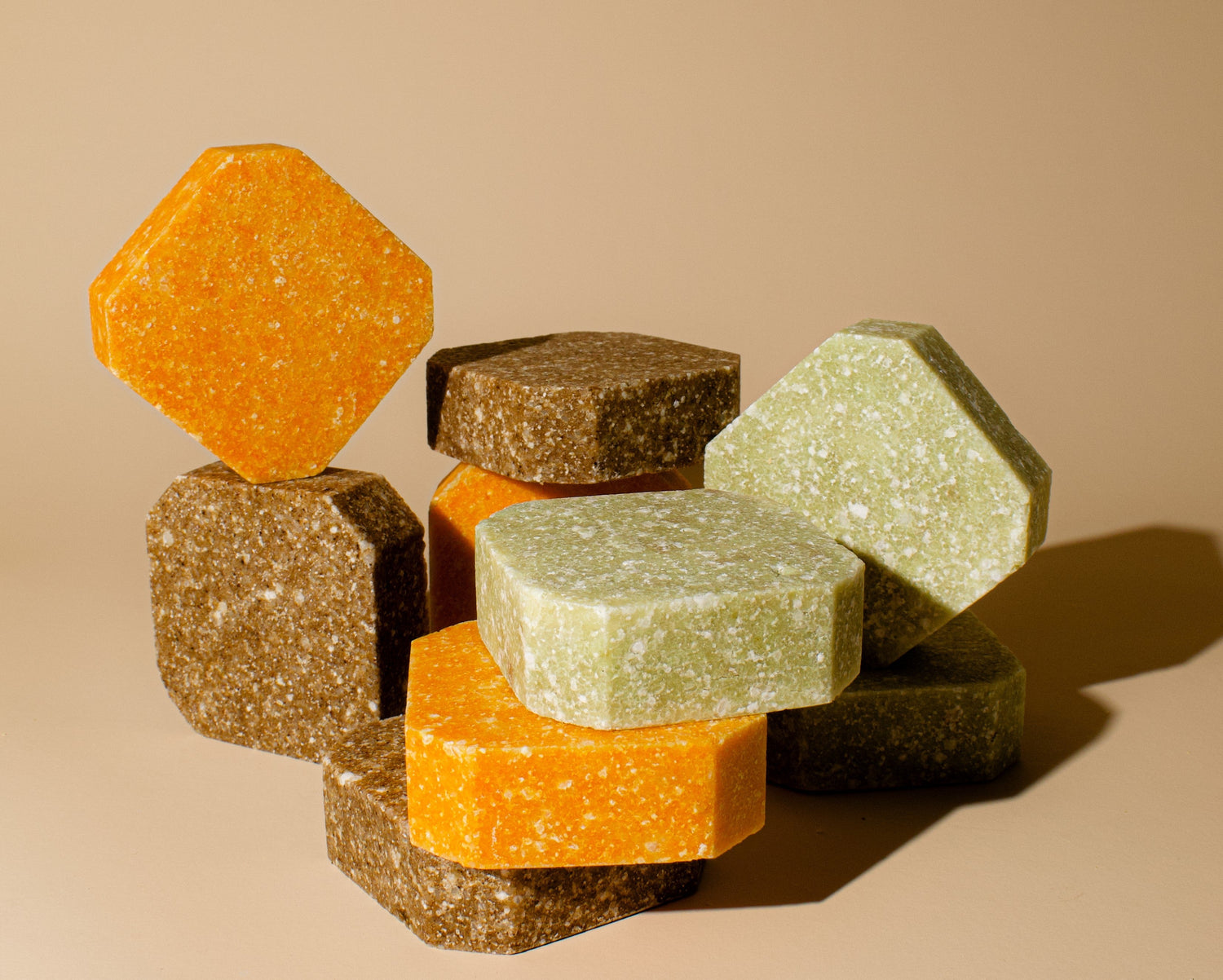
The solution is not to strip the scalp of oil more aggressively. It is to understand why the scalp is overproducing oil in the first place, and to choose products that work with the scalp's natural regulatory systems rather than against them. A properly formulated shampoo bar for oily hair - one built around ingredients like kaolin clay, tea tree oil and other targeted natural actives - can genuinely break the cycle of excess oil and over-washing that traps so many people in a relentless daily routine.
How Sebum Works: The Reason Your Scalp Gets Oily
Sebum is a natural, waxy substance produced by the sebaceous glands - small glands attached to hair follicles throughout the scalp. Sebum serves important functions: it moisturises and protects the scalp, forms part of the scalp's acid mantle (a protective barrier against bacteria and environmental damage) and travels down the hair shaft to condition the hair naturally.
The problem begins when sebaceous glands become overactive and produce more sebum than the scalp needs. This excess sebum migrates along the hair shaft from root to tip, leaving hair looking greasy and feeling heavy.
Several factors influence sebum production:
Genetics: The baseline activity level of your sebaceous glands is partly genetic. Some people are simply predisposed to oilier scalps than others.
Hormones: Sebum production is regulated by androgens - particularly testosterone and its derivatives - which is why oiliness often increases during puberty, during hormonal fluctuations in the menstrual cycle and during periods of elevated stress.
Diet: A diet high in refined sugars and dairy has been associated with increased sebum production, though the relationship is complex and varies between individuals.
Climate: Warm, humid weather stimulates sebaceous gland activity. The UK's milder climate means this is less of a factor than in tropical countries, but central heating and indoor environments can still influence scalp conditions.
Product choice: This is the factor most within your control - and, for many people with oily hair, it is also the most counterproductive. Conventional shampoos designed for oily hair often contain harsh sulphate-based detergents that strip the scalp so aggressively that the sebaceous glands respond by producing even more oil to compensate. This is the rebound oiliness cycle - and it is why many people find themselves washing their hair daily just to manage a problem that daily washing is actively making worse.
The Rebound Oiliness Cycle: Why Stripping Doesn't Work
The rebound oiliness cycle is well-documented and widely experienced but not well-explained by most conventional hair care brands.
Here is what happens: you use a shampoo with strong sulphate detergents (SLS or SLES). These strip the scalp of virtually all its sebum, along with its natural protective oils. The scalp - a sophisticated biological organ that monitors its own moisture levels - detects the sudden depletion and responds by ramping up sebum production to restore balance. Because the glands overproduce slightly to compensate, your hair becomes greasy faster after washing than it would have naturally.
You wash again, the cycle repeats, and over time the sebaceous glands become calibrated to a perpetual state of stripping and compensating. Washing daily - or even twice daily - becomes necessary to manage hair that was never naturally this oily to begin with.
The way out of this cycle is to cleanse with something gentle enough not to trigger the compensatory response. A shampoo bar formulated for oily hair with plant-derived surfactants at the correct pH cleanses effectively without the aggressive stripping - allowing the sebaceous glands to recalibrate to a lower, more natural level of output over a period of weeks.
Kaolin Clay: The Oil-Absorbing Powerhouse
Kaolin - also known as china clay - is a soft, white mineral clay that has been used in cosmetic formulations for centuries. It is the standout ingredient in shampoo bars designed for oily hair, and for good reason.
Kaolin clay works primarily through adsorption: its fine, porous particles attract and bind to excess sebum molecules on the scalp surface, drawing them away from the scalp and into the lather without stripping the scalp's protective acid mantle. This is a meaningfully different action from the detergent-based stripping of sulphate shampoos.
The key advantages of kaolin clay for oily hair:
Selective oil absorption: Kaolin absorbs excess sebum while leaving enough natural moisture on the scalp to prevent the compensatory response. It removes the grease without triggering the rebound.
Gentle cleansing: Kaolin is a mild, non-abrasive mineral with no known irritants. It is suitable for sensitive scalps, including those that have become inflamed or reactive from years of harsh cleansing.
Scalp clarifying: Over time, kaolin clay helps to clarify the scalp - removing the build-up of product residue, dead skin cells and excess oil that can clog follicles and contribute to scalp conditions like seborrhoeic dermatitis.
Detoxifying: Kaolin clay has mild detoxifying properties, binding to environmental pollutants and toxins on the scalp surface - particularly relevant in urban UK environments.
In a solid shampoo bar format, kaolin is incorporated directly into the formula, activating with water during use to deliver its oil-absorbing benefits throughout every wash.
Tea Tree Oil: Antimicrobial Scalp Health
If kaolin clay is the absorber, tea tree oil is the corrector. Extracted by steam distillation from the leaves of Melaleuca alternifolia - a tree native to Australia - tea tree oil has been used medicinally for its antimicrobial and antifungal properties for centuries.
On an oily scalp, tea tree oil addresses several interconnected problems:
Antimicrobial action: An oily scalp creates an environment that is hospitable to bacteria and fungi, including Malassezia - a naturally occurring scalp fungus that, when overgrown, contributes to dandruff and seborrhoeic dermatitis. Tea tree oil's principal active compound, terpinen-4-ol, has been shown in multiple studies to inhibit Malassezia and reduce the symptoms of dandruff and scalp irritation.
Anti-inflammatory properties: Scalps that are chronically oily are often also chronically inflamed - a combination that can contribute to follicle blockage and even accelerated hair loss over time. Tea tree oil's anti-inflammatory action helps calm scalp irritation and reduce redness.
Sebum regulation: Some evidence suggests that tea tree oil may have a mild direct effect on sebum production, possibly through its action on the scalp's bacterial environment, which influences sebaceous gland activity indirectly.
Cooling and refreshing: Tea tree oil has a distinct, fresh, slightly medicinal scent that provides a clean, invigorating sensation on the scalp during washing. For people who associate oily hair with feeling unclean, this sensory element is also psychologically reassuring.
Tea tree oil should always be used in appropriately diluted concentrations in hair care products - it is a powerful botanical that can cause irritation in high concentrations. In a well-formulated shampoo bar for oily hair, the concentration is calibrated to deliver its benefits without irritation.
Other Key Natural Ingredients for Oily Hair
A well-rounded shampoo bar for oily hair draws on a wider range of natural actives in addition to kaolin clay and tea tree oil:
Green Tea Extract: Rich in polyphenols and catechins, green tea extract has been studied for its potential to inhibit 5-alpha reductase - the enzyme that converts testosterone into dihydrotestosterone (DHT), one of the primary hormonal drivers of excess sebum production. Green tea extract on the scalp may therefore help address oiliness at a hormonal level, not just a surface level.
Peppermint Oil: Peppermint's primary active, menthol, stimulates blood circulation in the scalp, promotes a cooling sensation and has mild antimicrobial properties. It also helps to invigorate a sluggish scalp and leaves a long-lasting feeling of freshness between washes - contributing to the goal of extending time between washes as the scalp recalibrates.
Neem: Used in Ayurvedic scalp care for millennia, neem has strong antifungal and antibacterial properties that complement tea tree oil's action against scalp microbiome imbalance. Neem also has mild astringent properties that help to tighten pores - or more accurately, to reduce the appearance and sebum output of enlarged follicle openings on the scalp.
Witch Hazel Extract: A natural astringent derived from the bark and leaves of the Hamamelis virginiana shrub. Witch hazel gently tightens the scalp's surface, reducing the flow of sebum from the glands to the hair shaft. It is also anti-inflammatory, making it valuable for scalps that are oily and irritated simultaneously.
What to Look for When Choosing a Shampoo Bar for Oily Hair in the UK
The UK market for shampoo bars has expanded rapidly, but not all bars are formulated equally. When choosing a shampoo bar for oily hair, look for:
Sulphate-free formula: Non-negotiable. SLS and SLES will perpetuate the rebound oiliness cycle.
pH-balanced: The bar should be formulated in the acidic range (pH 4.5-5.5) to respect the scalp's acid mantle. Traditional soap-based bars are highly alkaline and unsuitable for oily scalp management.
Kaolin clay listed in the ingredients: This is your primary indicator of targeted sebum absorption.
Tea tree oil, peppermint oil or green tea extract: These signal active scalp management beyond basic cleansing.
No synthetic fragrances: Synthetic fragrance compounds are among the most common causes of scalp irritation and can exacerbate inflammation that contributes to oiliness. Natural botanical scents from essential oils are preferable.
Minimal packaging: A sign that the brand is thinking holistically about sustainability - important for UK consumers increasingly conscious of environmental impact.
Karmic Skin's shampoo bar for oily hair combines kaolin clay, tea tree oil, peppermint, green tea extract and neem in a vegan, sulphate-free, pH-balanced formula. It is designed not just to manage oily hair in the short term, but to help break the over-washing cycle over time - giving your scalp the conditions it needs to rebalance.
Breaking the Cycle: What to Expect When You Switch
Transitioning from a conventional sulphate shampoo to a natural shampoo bar for oily hair involves a recalibration period. During the first week or two, it is common for hair to feel greasier than usual as the sebaceous glands - calibrated to compensate for aggressive stripping - continue to overproduce before readjusting.
Resist the urge to wash more frequently. Instead, try extending the time between washes by one day per week, using a small amount of dry shampoo if needed. Within three to four weeks, most people report a meaningful reduction in how quickly their hair becomes oily - an indicator that the recalibration is working.
This is the moment the cycle breaks. And once it does, the daily battle with your scalp's oil production becomes a thing of the past.
Visit karmicskin.com to explore the full range of natural shampoo bars and find the formula that is right for your scalp.


