Colour-treated hair is beautiful - but it demands careful handling. Whether you have had highlights, a full colour, balayage or a vibrant fashion shade, the colouring process changes the structure of your hair in ways that make it simultaneously more delicate and more demanding than virgin hair. Get the aftercare wrong and you will watch your colour fade in the shower, your hair grow dry and brittle and your next salon appointment arrive sooner than you planned.
The debate around conditioning shampoo bars versus traditional bottled conditioners is particularly relevant for colour-treated hair, where every product choice either extends the life of your colour or chips away at it. This guide explores what conditioning shampoo bars actually are, how they compare with conventional conditioners, and why making the switch could be one of the best decisions you make for your coloured hair - and for the planet.
What Happens to Hair During the Colouring Process
To understand why colour-treated hair needs special care, it helps to understand what colouring actually does to your hair's structure.
Permanent and semi-permanent colour dyes work by opening the hair cuticle - the outer protective layer of overlapping scales - to allow pigment molecules to enter the hair cortex (the inner layer where colour takes hold). This opening is achieved through an alkaline developer, typically hydrogen peroxide in combination with ammonia or an ammonia alternative.
Once the cuticle has been forced open and the colour deposited, it does not fully return to its pre-colour state. The cuticle becomes more porous - quicker to lift in response to heat, water and products, and more likely to allow colour molecules to leach out. This porosity is why coloured hair:
- Fades faster when washed with hot water
- Loses vibrancy when exposed to harsh cleansing agents
- Becomes drier more quickly than uncoloured hair
- Is more susceptible to breakage at the point of chemical processing.
Everything you use on colour-treated hair - from shampoo to conditioner to styling products - either helps manage this porosity or worsens it. This is where the choice between a conditioning shampoo bar and a traditional conditioner becomes significant.
What Is a Conditioning Shampoo Bar?
A conditioning shampoo bar is a solid, concentrated hair cleansing product that combines cleansing and conditioning actives in a single bar format. Unlike traditional shampoo bars (which were often made with soap-based formulations that produced a high-pH lather and left hair feeling waxy and unmanageable), modern conditioning shampoo bars are formulated with:
- Gentle, sulphate-free surfactants derived from plants (such as sodium from coconut oil or glucosides from sugar)
- Conditioning actives such as behentrimonium methosulphate (a gentle, plant-derived conditioning agent)
- Natural oils and butters - argan oil, shea butter, cocoa butter - to moisturise and seal the cuticle
- Botanical extracts that target specific hair concerns.
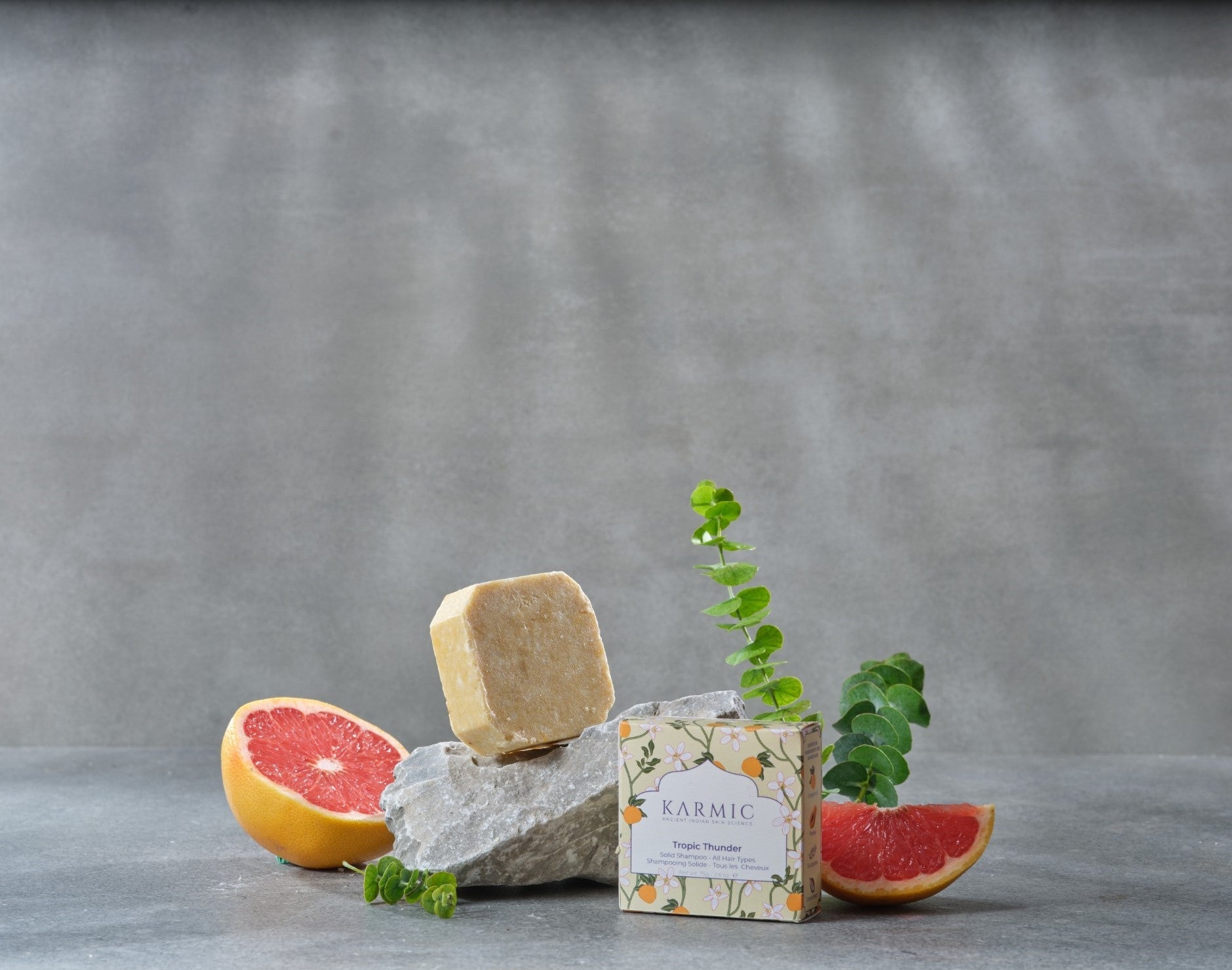
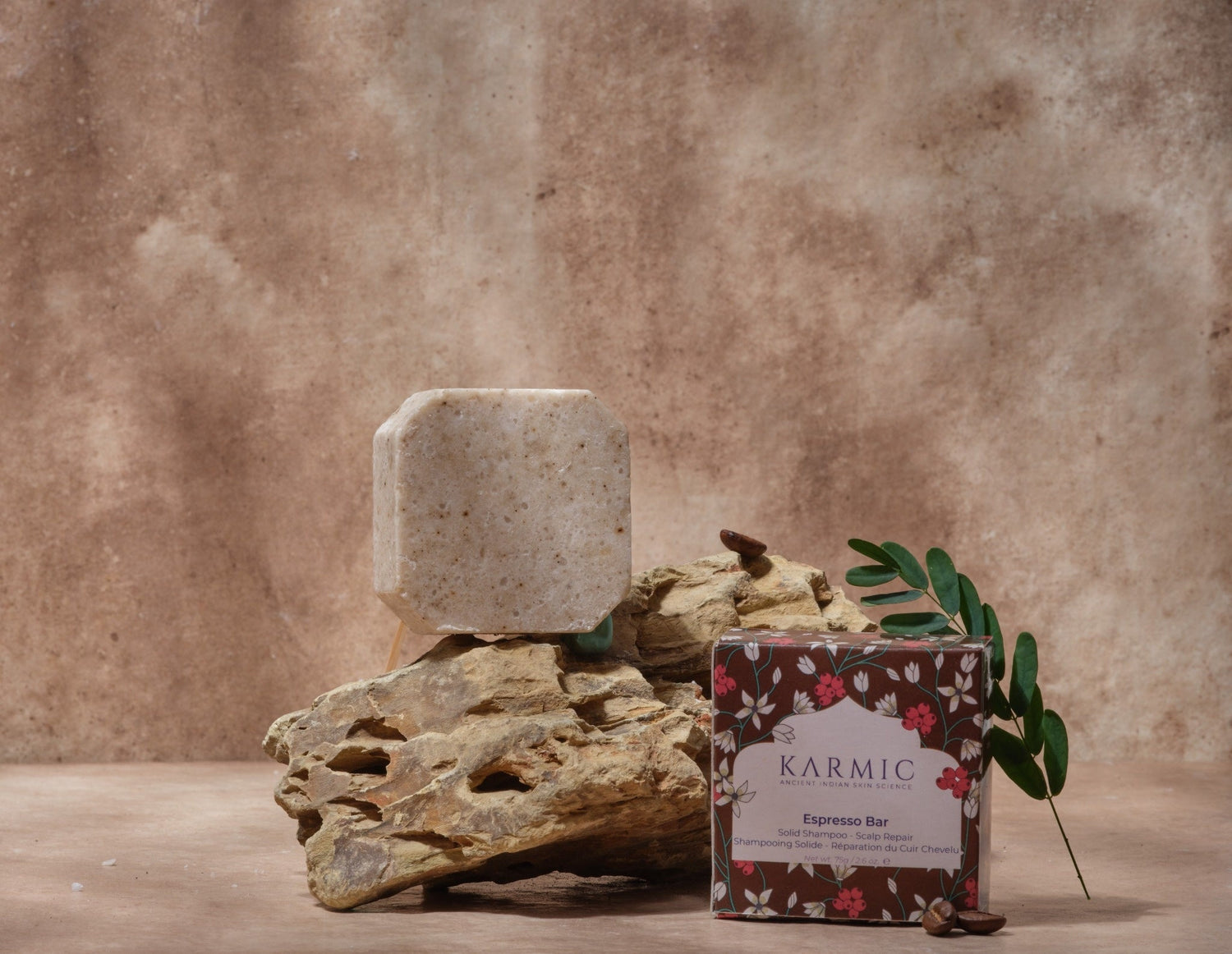
A high-quality conditioning shampoo bar, such as those in the Karmic Skin range, cleanses and conditions simultaneously in a single step - reducing the time your colour-treated hair spends exposed to water and cleansing agents, while delivering conditioning benefits throughout the wash.
The pH Question: Why It Matters for Colour-Treated Hair
This is the detail that many reviews of shampoo bars overlook, but it is arguably the most important factor for colour-treated hair.
Healthy hair has a natural pH of approximately 4.5 to 5.5 - mildly acidic. At this pH, the cuticle remains closed and flat, colour molecules stay locked inside the hair shaft, and hair appears smooth and shiny.
Traditional soap-based shampoo bars are typically highly alkaline, with a pH of 9 to 10. At this pH, the cuticle is forced open. For colour-treated hair, this means colour molecules are actively encouraged to leach out with every wash. This is why old-style shampoo bars earned a bad reputation among coloured hair users.
Modern conditioning shampoo bars, by contrast, are formulated to match the hair's natural acidic pH. Our bars are pH-balanced, meaning they work with the hair's structure rather than against it - keeping the cuticle closed during cleansing rather than forcing it open, and thereby protecting colour vibrancy with every wash.
Traditional bottled conditioners are also typically formulated in the acidic pH range, which is part of their core function - they help neutralise the alkaline pH introduced by shampoo and physically close the cuticle after washing.
The key distinction is that a pH-balanced conditioning shampoo bar maintains an appropriate pH throughout the wash, whereas using a traditional alkaline shampoo followed by an acidic conditioner creates a cycle of cuticle opening and partial closing that, over time, stresses the hair shaft.
Sulphate-Free: A Non-Negotiable for Coloured Hair
Sodium lauryl sulphate (SLS) and sodium laureth sulphate (SLES) - the primary surfactants in most conventional liquid shampoos - are powerful detergents. They are highly effective at removing dirt, sebum and product build-up. They are also highly effective at stripping colour from hair.
The mechanisms are related: SLS and SLES strip the hair's natural oils because they are indiscriminate detergents that remove everything, including the pigment molecules sitting in the cortex of colour-treated hair. Regular use of SLS-based shampoos is one of the fastest ways to fade hair colour.
Conditioning shampoo bars formulated with plant-derived surfactants clean effectively without the aggressive stripping action of sulphates. The result is a gentler cleanse that preserves colour for longer between salon visits.
Research consistently supports sulphate-free cleansing for extending colour longevity. For colour-treated hair, switching to a sulphate-free conditioning shampoo bar is one of the most impactful single changes you can make to your hair care routine.
Conditioning Shampoo Bar vs Traditional Conditioner: A Direct Comparison
Ingredient Quality
Traditional bottled conditioners often contain water as their primary ingredient (frequently the first or second on the ingredients list), followed by silicones for slip and shine, synthetic fragrance and a blend of conditioning agents of varying quality. The high water content means more product is required per use and the product has a lower concentration of active ingredients.
Conditioning shampoo bars are concentrated. There is no water diluting the active ingredients, which means a higher proportion of the bar is actual conditioning and cleansing actives. A single bar - typically 50-80g - delivers significantly more washes than a standard 300ml bottle of liquid product at equivalent conditioning effect.
Colour Protection
pH-balanced, sulphate-free conditioning shampoo bars protect colour by keeping the cuticle closed during washing. Traditional conditioners also help close the cuticle, but they cannot undo the damage caused by an SLS shampoo used immediately before them. When a conditioning shampoo bar cleanses and conditions simultaneously at the correct pH, colour is better protected throughout the entire cleansing process.
Moisture Retention
The emollient oils and butters in a quality conditioning shampoo bar coat the hair shaft during washing, helping seal in moisture as the bar is rinsed out. This is particularly beneficial for the dry, porous hair that is typical of colour-treated strands.
Traditional conditioners applied post-shampoo can also be effective at sealing in moisture, particularly if they contain ingredients such as shea butter, argan oil or aloe vera. However, the sequential process - shampoo strips, conditioner repairs - is inherently less efficient than a product that does both simultaneously.
Breakage Reduction
Colour-treated hair is more prone to breakage, particularly at the point of chemical processing. Detangling wet, fragile colour-treated hair is one of the highest-risk moments for breakage.
Conditioning shampoo bars provide slip and detangling as part of the wash, making it easier and safer to manage the hair while it is most vulnerable. Many users report noticeably less hair in the plug hole after switching to a conditioning shampoo bar - an indicator of reduced mechanical breakage during washing.
Sustainability
This comparison has a clear winner. A traditional conditioner bottle - typically made from single-use plastic - is used and discarded in a few weeks. A conditioning shampoo bar comes in minimal, frequently paper-based packaging and lasts considerably longer. Over the course of a year, switching to a conditioning shampoo bar can eliminate dozens of plastic bottles from your household's waste stream.
Our packaging philosophy is built around minimal waste: the bars are wrapped in compostable or recyclable materials, and the concentrated format means fewer shipments, less weight and a lower carbon footprint throughout the supply chain.
Making the Switch: What to Expect
Transitioning from conventional liquid shampoo and conditioner to a conditioning shampoo bar may involve a short adjustment period - typically one to two weeks - during which the scalp recalibrates its sebum production and the hair adjusts to the new cleansing approach. During this period, hair may feel different - sometimes slightly different in texture or weight.
This adjustment is entirely normal and resolves within a few washes. Persisting through the transition period is essential to experiencing the full benefits of the switch.
To support the transition, use cool or lukewarm water when washing, ensure the bar is fully rinsed out of the hair and avoid hard water if possible (a simple shower head filter can make a significant difference in the UK, where water hardness varies considerably by region).
For Colour-Treated Hair, the Verdict Is Clear
A well-formulated conditioning shampoo bar - pH-balanced, sulphate-free, rich in natural conditioning actives - outperforms the traditional liquid shampoo-and-conditioner combination for colour-treated hair across multiple measures: colour protection, moisture retention, ingredient quality and environmental impact.
Karmic Skin's conditioning shampoo bars are vegan, free from synthetic sulphates and silicones, and formulated with Ayurvedic botanical actives that nourish colour-treated hair while respecting the planet. If you care about the longevity of your colour and the quality of what you put on your hair, the switch is worth making.
Discover a thoughtfully curated range at karmicskin.com and choose the conditioning shampoo bar best suited to your colour-treated hair.