

Frizz is one of the most common hair concerns in the UK - and one of the most misunderstood. On a humid British morning, when your hair has expanded to three times its desired volume before you have even left the house, the instinct is to reach for the heaviest product on your shelf and hope for the best. However, simply hunting for the best anti-frizz hair products and covering up the issue without addressing its root causes is a short-term fix that often makes things worse over time.
The good news is that understanding why frizz happens - and choosing the right natural, vegan ingredients to address it - gives you genuine, lasting control over your hair. This guide walks you through the science of frizz, a complete step-by-step anti-frizz routine, and the plant-based ingredients and products that actually deliver results without the trade-offs of synthetic silicones and harsh chemicals.
The Science of Frizz: Why Your Hair Does What It Does
Frizz occurs when the hair's outer layer - the cuticle - is raised and roughened rather than lying flat. The cuticle is made up of overlapping scales, much like roof tiles. When those scales lie flat, hair appears smooth, shiny and controlled. When they are lifted, moisture from the air enters the hair shaft unevenly, causing individual strands to swell at different rates. The result is the uneven, expanded texture we know as frizz.
There are three primary causes of raised cuticles and frizz:
Moisture imbalance: Hair that lacks internal moisture is porous and draws in ambient humidity erratically, causing the cuticle to swell. This is why frizz worsens on humid days - the hair is essentially trying to rehydrate itself from the air because it is not adequately moisturised from within.
Damaged cuticles: Chemical processing (bleaching, colouring, perming), heat styling and aggressive mechanical handling all physically damage the cuticle. Damaged cuticles cannot lie flat, regardless of humidity levels.
Environmental factors: Wind, hard water, UV exposure and pollution all contribute to cuticle disruption. The UK's climate - mild but frequently humid and overcast - creates conditions that are particularly prone to triggering frizz.
The most effective anti-frizz approach addresses all three causes: restoring internal moisture, repairing or protecting the cuticle and creating a barrier against environmental humidity.
Why Synthetic Silicones Are a Short-Term Fix with Long-Term Consequences
Walk into any high street chemist and you will find anti-frizz products loaded with silicones - dimethicone, cyclomethicone amodimethicone, and their many relatives. These compounds work by coating the hair shaft with a waterproof film that physically blocks humidity and smooths the appearance of the cuticle.
The problem is that silicones do not absorb into the hair. They sit on the outside, building up over time, gradually weighing hair down, blocking moisture from reaching the hair shaft and creating a barrier that prevents nourishing ingredients from penetrating. Hair treated with silicones long-term becomes increasingly reliant on them - appearing smooth only when the coating is present, and increasingly frizzy and dry underneath.
Silicones also have significant environmental consequences. Many silicones - particularly cyclic silicones like D4, D5, and D6 - are classified as persistent pollutants that accumulate in aquatic environments. They are slow to biodegrade and have been detected in rivers and sediments across Europe.
Natural, vegan anti-frizz ingredients work differently. Rather than coating the hair, they penetrate it, restore its moisture balance from within and support the hair's own structure. The results are slower to appear but genuinely transformative - and they improve rather than degrade hair health over time.
The Best Natural Vegan Anti-Frizz Ingredients
Argan Oil: Cold-pressed from the kernels of the Moroccan argan tree, argan oil is rich in oleic acid, linoleic acid and vitamin E. It penetrates the hair shaft to restore moisture, smooths the cuticle and provides UV protection. Unlike silicones, argan oil improves hair condition with each application rather than creating dependency.
Shea Butter: Extracted from the nuts of the African shea tree, shea butter is deeply moisturising and rich in fatty acids and vitamins A, E and F. It coats the hair in a breathable layer that locks in moisture without the occlusive build-up of silicones. It is particularly effective for thick, coarse or chemically treated hair.
Coconut Oil: One of the few plant oils that can genuinely penetrate the hair shaft rather than simply sitting on the surface. Coconut oil reduces protein loss from the hair, preventing the structural damage that makes frizz worse over time. It works best as a pre-wash treatment or in a deeply moisturising conditioner.
Aloe Vera: This gel has a molecular structure that allows it to penetrate the hair shaft and hydrate from within. It also has a pH close to that of healthy hair, making it effective at smoothing and sealing the cuticle. It is lightweight enough to use in leave-in products without weighing hair down.
Marshmallow Root Extract: Rich in natural mucilage - a slippery, gel-like substance - marshmallow root coats each strand with a conditioning layer that reduces friction and detangles naturally. It is particularly effective at smoothing the cuticle and reducing static.
Hibiscus Extract: Used in Ayurvedic hair care for centuries, hibiscus is rich in amino acids that strengthen the hair shaft and natural mucilage that conditions the cuticle. It adds slip, reduces breakage and supports scalp health simultaneously.
Step-by-Step Anti-Frizz Hair Care Routine
Step 1: Pre-Wash Treatment (Once or Twice Weekly)
Before shampooing, apply a small amount of coconut oil or a dedicated pre-wash oil treatment to dry hair, working it through from mid-lengths to ends. Leave for at least 30 minutes - or overnight with a shower cap for intense repair. This pre-saturation reduces the amount of protein that shampoo strips from the hair and prevents the hair from absorbing excess water during washing, which is a major trigger for frizz.
Step 2: Gentle, Sulphate-Free Cleansing
Choose a shampoo or shampoo bar that is free from sodium lauryl sulphate (SLS) and sodium laureth sulphate (SLES). These synthetic detergents are highly effective at removing dirt - but they also strip the hair's natural oils, leaving the cuticle dry, raised and vulnerable to frizz.
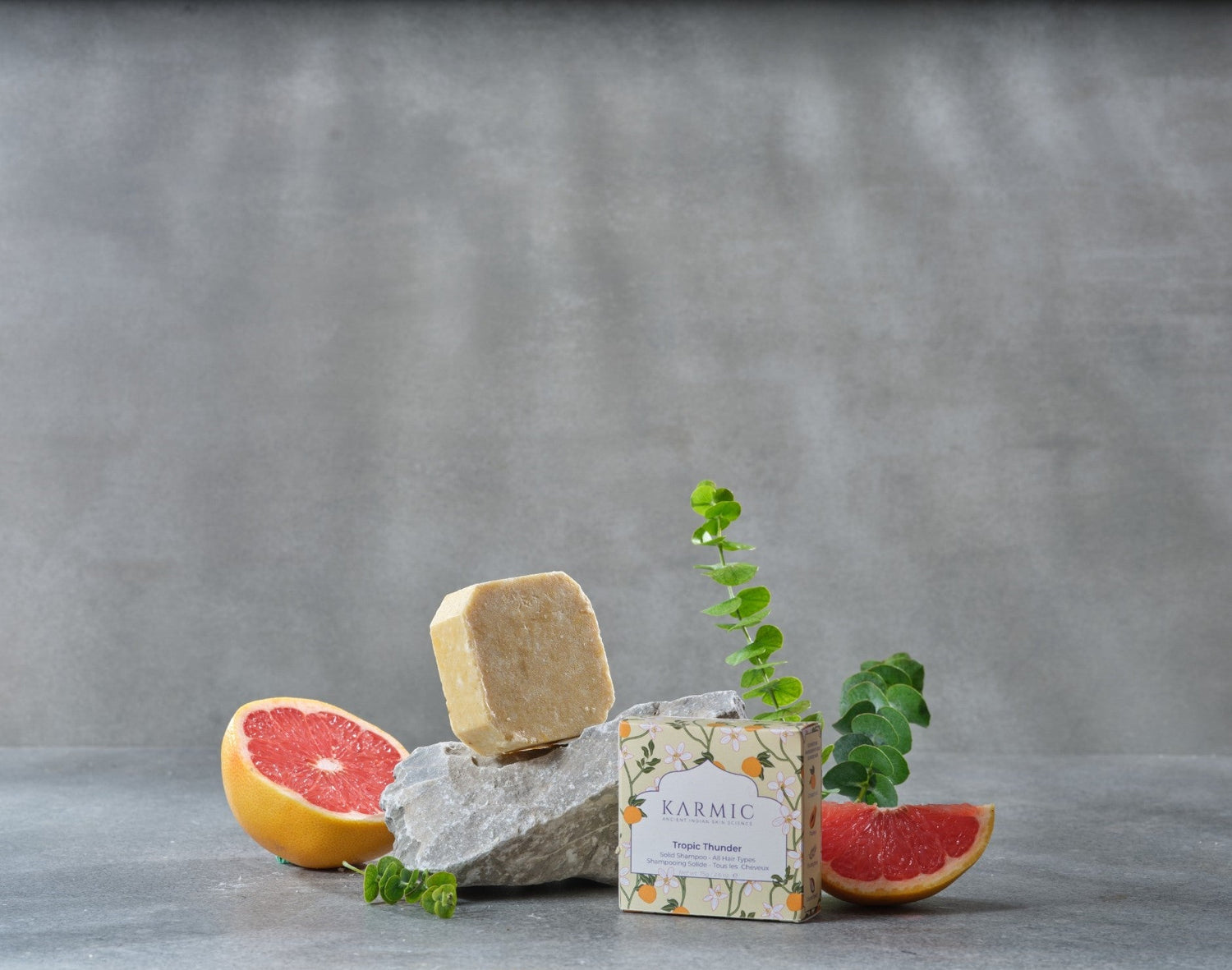
Karmic Skin's natural hair cleansers use gentle plant-derived cleansing agents that remove build-up without disrupting the hair's moisture balance. Wash in lukewarm water - not hot - as heat expands and raises the cuticle.
Massage the product into the scalp rather than roughly scrubbing the lengths, and rinse thoroughly.
Step 3: Condition Every Wash
This step is non-negotiable for frizz control. Conditioner helps close the cuticle after washing and replaces some of the moisture removed during cleansing. Apply to mid-lengths and ends (not the scalp), leave for 2-3 minutes, and rinse with the coolest water you can tolerate. The cool rinse is one of the most effective single steps for frizz control - it physically contracts the cuticle and promotes smoothness.
For dry or damaged hair, use a deep conditioning mask once a week in place of your regular conditioner.
Step 4: Apply a Leave-In Treatment While Hair Is Damp
This is the step most people skip - and missing it is the most common reason anti-frizz routines fail. While hair is still damp (not soaking wet, not bone dry), apply a lightweight leave-in conditioner or anti-frizz serum. This seals in the moisture from your wash, provides a barrier against humidity and smooths the cuticle before drying begins.
Look for leave-in products featuring aloe vera, argan oil and marshmallow root extract. Our leave-in formulations use these ingredients to provide protection without silicone build-up.
Step 5: Dry with Care
How you dry your hair matters enormously for frizz. Rubbing with a standard towel creates enormous friction that roughens the cuticle and causes physical damage. Instead, use a microfibre towel or a cotton T-shirt to gently scrunch the water from your hair. Do not rub.
If using a hairdryer, use a diffuser attachment and the lowest heat setting. If air-drying, resist the urge to touch or manipulate the hair while it dries - this disrupts the cuticle as it is closing.
Step 6: Finish and Protect
Once hair is dry, apply a small amount of argan oil or a natural frizz-control serum to the surface of your hair to add shine, smooth any remaining flyaways and provide an additional layer of humidity resistance. A little goes a long way - use too much and you risk a greasy finish.
Why Karmic Skin's Natural Approach Makes a Difference
Our approach to anti-frizz hair care is rooted in Ayurvedic tradition and modern plant science. The products are 100% vegan, free from synthetic silicones, sulphates, parabens, and artificial fragrances, and formulated to work with the hair's natural structure rather than masking it.
The result is not just frizz-free hair today - it is healthier, stronger, more resilient hair over time. As the hair's moisture balance improves and the cuticle becomes less prone to lifting, the need for intensive anti-frizz intervention decreases. Genuine hair health is self-reinforcing.
For the UK climate - where humidity is a near-constant companion for much of the year - having a routine built on genuinely nourishing, effective natural ingredients is the only approach that offers lasting results.
Explore our range of natural anti-frizz products at karmicskin.com and start building a routine that works with your hair, not against it.