
Frizz is not exclusively a thick-hair problem. Fine and thin hair gets frizzy too and, in some ways, managing it is more difficult. The products that work brilliantly for thick, coarse or curly hair are often far too heavy for fine strands, leaving them flat, greasy or limp. Too much product and you have traded frizz for a different problem entirely.
Finding the best anti-frizz hair products for fine hair means understanding what frizz actually is, why fine hair is particularly vulnerable to it and which ingredients deliver smoothness without weight.
WHY FINE HAIR FRIZZES
Frizz happens when the outer layer of the hair shaft - the cuticle - lifts rather than lying flat. When the cuticle is raised, individual strands absorb moisture from the surrounding air and swell unevenly. The result is the flyaways, puffiness and loss of definition that we call frizz.
Fine hair frizzes for a few specific reasons. First, fine strands have less natural oil coating them than thicker hair types. Sebum produced at the scalp has to travel further down a finer shaft and often does not reach the mid-lengths and ends in sufficient quantity, leaving those sections drier and more reactive to humidity.
Second, fine hair is more easily damaged by heat, chemical processing and rough handling. A damaged cuticle does not lie flat, regardless of humidity levels.
Third, fine hair has fewer protective protein bonds per strand, which makes it structurally more vulnerable to swelling and moisture fluctuation.
The challenge with anti-frizz products for fine hair is that the ingredients most effective at sealing the cuticle - silicones, heavy oils, thick creams - are also the ones most likely to make fine hair look flat and feel coated.
WHAT TO LOOK FOR (AND WHAT TO AVOID)
Ingredients that work for fine hair
Lightweight plant oils are the most effective frizz-fighters for fine hair. Look for oils that absorb quickly without leaving a film: argan oil, camellia oil, marula oil and lighter Ayurvedic oils like karanja seed oil fall into this category. These oils smooth the cuticle and add a protective layer against humidity without the heaviness of coconut or castor oil.
Hibiscus is worth seeking out specifically. It contains natural mucilage - a plant-derived conditioning agent - that smooths the hair shaft and adds slip without coating it. It is particularly effective for fine hair because it provides softness without residue.
Proteins in small amounts can strengthen fine hair and help the cuticle lie flatter. Look for hydrolysed proteins (wheat, oat or rice) in products you use after washing.
Humectants like glycerin and aloe vera help balance moisture within the hair shaft, reducing the urge to absorb humidity from the air. They work best when used alongside a sealing ingredient (like a lightweight oil) that locks the moisture in.
Ingredients to avoid
Heavy silicones: dimethicone and cyclomethicone are common in mainstream anti-frizz serums and are particularly problematic for fine hair. They provide immediate smoothness but accumulate on the hair shaft over time, weighing strands down and requiring heavy clarifying to remove.
Thick oils: coconut oil, shea butter and castor oil are excellent for coarse or curly hair but too dense for fine strands. Even a small amount can leave fine hair looking oily or flat.
High-alcohol formulas: some anti-frizz sprays and styling products contain denatured alcohol, which dries the hair shaft and ultimately worsens frizz over time.
HOW YOUR WASH DAY ROUTINE AFFECTS FRIZZ
For fine hair, frizz management starts in the shower, not after it. The right washing routine reduces how much anti-frizz product you need to apply post-wash.
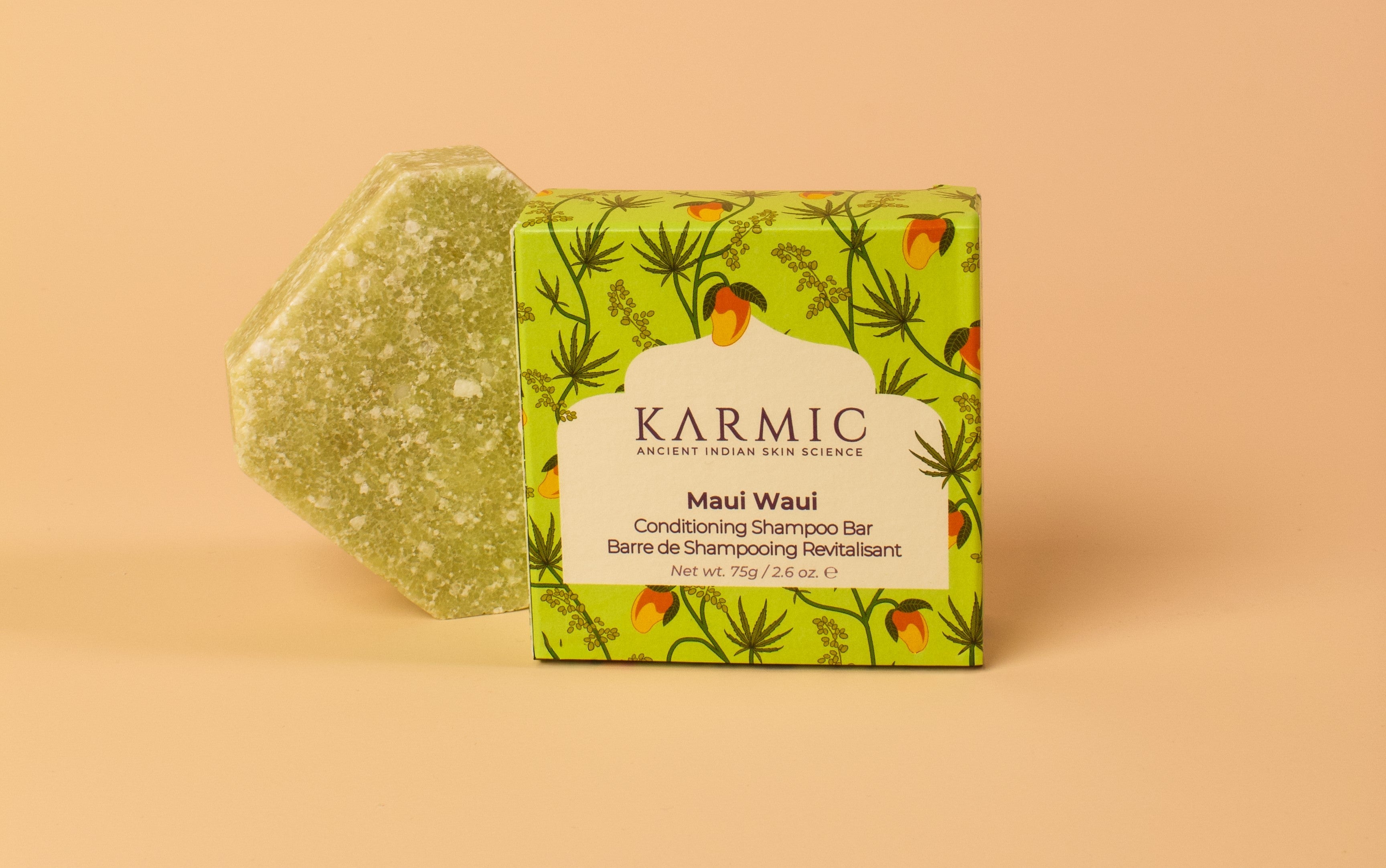
Use a conditioning shampoo bar rather than a stripping sulphate formula. Sulphates are particularly harsh on fine hair because they remove not just product buildup but the natural oils that fine hair can least afford to lose. A conditioning shampoo bar cleanses without over-stripping, leaving the cuticle in a calmer state that is less reactive to humidity after washing.
Follow with a hair conditioner bar focused on the mid-lengths and ends. Fine hair benefits from conditioning but does not tolerate heavy conditioning at the roots. Apply your conditioner bar to the lower two-thirds of your hair only, leave for a minute, then rinse thoroughly with cool water. Cooler water helps close the cuticle before you get out of the shower, which makes a meaningful difference to frizz levels.
Use cool water to finish off every single wash. It is a small habit with a noticeable effect.
POST-WASH CARE FOR FINE FRIZZY HAIR
Less is more when applying the best anti-frizz hair products to fine hair. A single pump or a few drops is almost always sufficient. Apply to damp rather than soaking wet hair, and work through the mid-lengths and ends first. Avoid the roots entirely unless you are deliberately adding texture.
A lightweight hair serum works better for fine hair than a cream or a mask. Look for serum formulas that are primarily oil-based with a lightweight, non-silicone carrier. Our Featherweight hair serum was formulated with this balance in mind - it delivers frizz control and shine without the weight that flattens fine strands.
Allow hair to dry naturally where possible. Heat styling opens the cuticle and - unless followed immediately by a blast of cool air - leaves fine hair more vulnerable to re-frizzing as it cools.
If you use a diffuser or blow dryer, use the lowest heat setting and a concentrator nozzle to direct airflow downward along the hair shaft rather than lifting it.
THE BIGGER PICTURE
Managing frizz in fine hair is not about finding one miracle product - it is about reducing the causes of cuticle disruption across your whole routine. Gentle cleansing, targeted conditioning and a lightweight finishing product used consistently will give you more control than any single heavy-duty treatment applied occasionally.
Explore the Karmic Skin haircare range at karmicskin.com