What Your Skin Actually Needs at Every Decade
Finding the best anti wrinkle serum is rarely a single, universal answer. The ingredients that deliver visible results for someone in her mid-thirties are not necessarily the same ones that will serve a woman navigating the hormonal shifts of her fifties. Skin ageing is a layered, cumulative process - one that is shaped by genetics, lifestyle, sun exposure and the natural decline of key structural proteins over time. UK dermatologists increasingly favour a decade-by-decade approach to active skincare, building routines around what the skin is biologically doing at each stage rather than chasing the same formulas for everyone.
This guide breaks down the most effective serum ingredients by age group, so you can make genuinely informed choices rather than simply reaching for what is most heavily marketed.
In Your 30s: Prevention and Early Intervention
What Is Happening to Your Skin
During your thirties, the skin's natural renewal cycle begins to slow. Collagen production starts to decline gradually, fine lines appear around the eyes and mouth, and uneven pigmentation can become more noticeable - particularly if sun protection has not been consistent. The damage accumulated in earlier years begins to surface during this decade, which makes it the ideal time to build a serious, preventative skincare routine.
Key Ingredients to Look For
Retinol is widely regarded as the gold-standard ingredient for this stage of life. It accelerates cell turnover, encourages collagen synthesis and helps to fade early signs of hyperpigmentation. Starting with a low-concentration formula and building tolerance gradually is the approach most dermatologists recommend.
Vitamin C is another cornerstone ingredient for the thirties. A well-formulated vitamin C serum offers antioxidant protection against free radical damage, brightens the complexion and supports collagen production. Look for stabilised forms such as ascorbic acid or sodium ascorbyl phosphate, which maintain their potency over time.
Niacinamide rounds out an effective regimen at this stage. This multi-tasking ingredient supports the skin's barrier function, minimises the appearance of enlarged pores and helps to even out skin tone. It is also notably well-tolerated, making it suitable for those who find stronger actives irritating.
In Your 40s: Targeting Deeper Lines and Loss of Firmness
What Is Happening to Your Skin
The forties bring more pronounced changes. Oestrogen levels begin to fluctuate, which affects skin hydration, elasticity and the rate of collagen breakdown. Lines that once appeared only with expression become more settled, the jawline may lose some definition and the skin can feel noticeably drier or more sensitised than it did a decade earlier.
Key Ingredients to Look For
Peptides become particularly valuable in your forties. These short chains of amino acids act as signalling molecules, communicating with the skin to stimulate collagen and elastin production. Matrixyl (palmitoyl pentapeptide-4) and Argireline (acetyl hexapeptide-3) are two of the most researched options, and both are commonly found in premium serums targeting loss of firmness.
Hyaluronic acid addresses the hydration deficit that often becomes prominent during this decade. It draws moisture into the skin from the surrounding environment, plumping the appearance of fine lines and giving the complexion a healthier, more youthful look. Formulas containing multiple molecular weights of hyaluronic acid are particularly effective, as they hydrate at different levels of the skin.
Retinol remains relevant in your forties, though many dermatologists will recommend moving to a slightly higher concentration or transitioning to prescription-strength retinoids if tolerated. Consistency is essential: the benefits of retinol build cumulatively over months of regular use.
Growth factors are also worth considering at this stage. Derived from sources such as plant stem cells or laboratory-synthesised peptides, they help to support cellular repair and may assist in reversing visible signs of photoageing. They are found in higher-end serums and are particularly suited to skin that has experienced significant sun exposure over the years.
In Your 50s: Supporting Structural Integrity and Barrier Health
What Is Happening to Your Skin
The fifties often coincide with the menopausal transition, which brings a significant drop in oestrogen. This hormonal shift accelerates collagen loss, reduces the skin's natural oil production and weakens the barrier function. Dryness, sensitivity and deeper wrinkling become more common concerns, and many women find that formulas they tolerated well a decade earlier now feel too stripping or irritating.
Key Ingredients to Look For
Ceramides are essential in your fifties. These lipid molecules are the building blocks of a healthy skin barrier, and their natural levels decline with age and hormonal change. Incorporating a ceramide-rich serum or moisturiser supports barrier integrity, locks in hydration and helps the skin resist environmental aggressors more effectively.
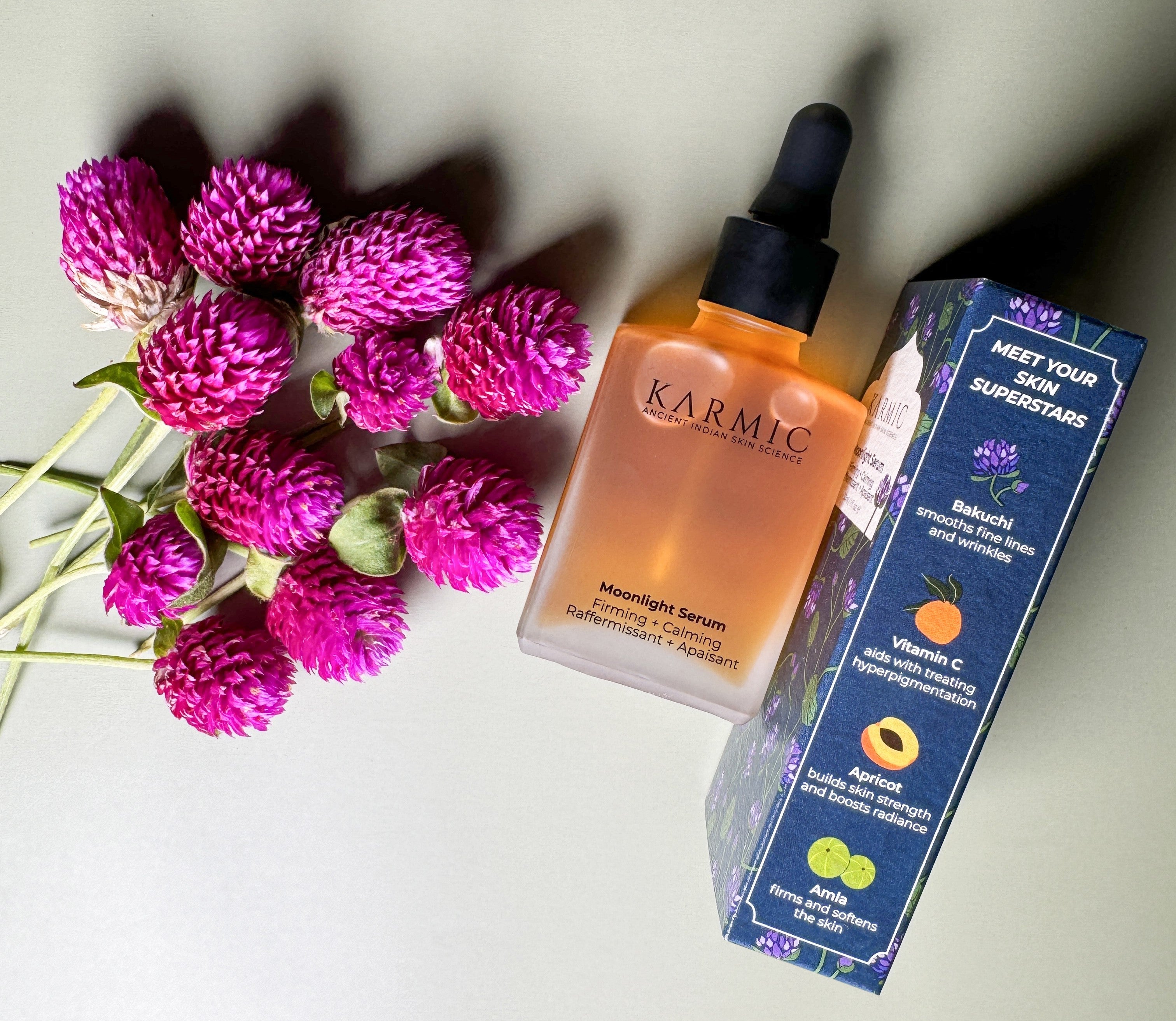
Bakuchiol has emerged as a compelling alternative to retinol for those whose skin has become too sensitive to tolerate traditional forms of vitamin A. Derived from the babchi plant, bakuchiol has been shown in clinical research to offer similar benefits to retinol - improved cell turnover, softened fine lines, improved firmness - without the associated redness or peeling. It is particularly well-suited to mature, sensitive or barrier-compromised skin.
Squalane is another ingredient that performs strongly in this decade. A lightweight emollient derived from plants (typically olives or sugarcane), it mimics the skin's own natural oils and helps to restore suppleness without clogging pores.
Phytoestrogen-rich botanical extracts, such as those derived from red clover, liquorice root or genistein (a soy isoflavone), are increasingly being incorporated into serums for menopausal and post-menopausal skin. These compounds interact with the skin's oestrogen receptors and may help to partially compensate for the hormonal decline that drives so much of the visible ageing that occurs during this stage.
Choosing the Right Formula: Practical Guidance
Layering and Compatibility
Not all active ingredients work well together. Vitamin C and retinol, for example, are best used at separate times of day - vitamin C in the morning to protect against daytime oxidative stress, retinol in the evening to support overnight cellular repair. Niacinamide pairs well with most actives and can help to buffer the potential irritation of retinol when used in combination.
The Importance of SPF
No anti-ageing serum will deliver its full potential without consistent daily sun protection. UV exposure is the single greatest external driver of premature skin ageing, and many active ingredients - particularly retinol and vitamin C - increase photosensitivity. A broad-spectrum SPF applied every morning is not optional; it is the foundation on which everything else rests.
Conclusion
Understanding the biology of your skin at each decade of life transforms the way you approach active skincare. Rather than searching broadly, you can seek out formulas specifically designed to address what your skin is experiencing right now. If you are ready to invest in a serum tailored to your age and skin concerns, start by identifying the one or two most pressing issues and build from there. Whether you are in your thirties, forties or fifties, the best anti wrinkle serum is ultimately the one formulated with the right ingredients for your skin at this particular stage of life.