
By late November the sun barely clears the rooftops, you leave for work in the dark and come home in the dark, and the sunscreen and brightening serum that dominated your summer routine start to feel like they belong to another season. It is a fair question to ask whether a vitamin C skincare step still earns its place. The short answer is that it may, though the reasons change a little once the weather does.
Is sun protection truly the sole reason to apply vitamin C?
Many people think of vitamin C as a summer product because it is often discussed alongside sun exposure. Vitamin C is an antioxidant, which means it helps neutralise unstable molecules called free radicals that can damage skin cells. Sunlight is one source of those molecules, but it is not the only one. Pollution, indoor heating, stress and normal metabolism all contribute to oxidative stress too.
Vitamin C is also involved in the skin's collagen production and is widely used for its brightening effect on dull or uneven tone. Research suggests topical vitamin C can support a more even, radiant look over time, although results vary from person to person and depend on the formulation.
How strong is winter sunlight, really?
The UV index is low in the UK in winter, and that is the reason many people stop thinking about sun protection. However, UVA rays, which are associated with skin ageing and pigmentation, are present all year round, even on cloudy days, and they pass through glass. A daily sunscreen is therefore still a sensible habit, and a low sun is not the same as no sun.
This is also where an antioxidant helps. Vitamin C is not a replacement for sunscreen and should never be treated as one, but research suggests antioxidants may complement it by supporting your skin's defences against everyday environmental stress. Use them together rather than choosing between them.
What does winter do to skin that vitamin C might help with?
Cold air and central heating tend to leave skin dull, tight and a little grey. That loss of radiance is often the very thing people use vitamin C to address. When the surface is dry and flaky, light bounces off it unevenly and the complexion looks tired, so a routine that supports brightness and hydration can make a visible difference.
Winter is also when pigmentation and marks from summer sun can show up more clearly against paler skin. If you are working on that, consistency matters more than strength, and a gentle daily routine usually beats an aggressive one that leaves your skin inflamed.
Is it better to apply vitamin C skincare in the morning or evening?
Either works well, as the ideal routine is whichever you will maintain consistently. Many people use it in the morning under sunscreen to take advantage of its antioxidant role. Others prefer the evening, especially if their skin feels more sensitive in cold weather, and some alternate depending on how the skin is feeling.
In winter, a sensible order is: cleanse, apply your vitamin C serum to clean skin, follow with moisturiser, and finish with sunscreen in the morning. Allow each product to absorb briefly before applying the following one. If your skin feels tight or stings, reduce how often you use it, or move it to a few evenings a week.
Consider a short scenario. Someone stops using serum in October because the sunshine has gone, and by December notices the skin looks flatter and the moisturiser seems to sit on the surface. Restarting a gentle brightening step two or three evenings a week, alongside a richer moisturiser, is often a calmer fix than reaching for a harsh exfoliant. Small, steady changes tend to be kinder to winter skin.
How can you avoid irritation in cold weather?
A compromised skin barrier is more likely in winter, so introduce or continue vitamin C carefully. Patch test any new product on the inner arm first, apply it to clean skin only, and keep your moisturiser rich enough to cope with the heating season. If skin becomes red, itchy or painful, stop using it and speak to a pharmacist or doctor.
People with very sensitive skin, eczema or rosacea, and anyone who is pregnant or breastfeeding, should take advice from a healthcare professional before starting a new active ingredient. That is not a reason to avoid skincare, just a reminder that personal advice matters more than general guidance.
A common mistake is layering several strong actives at once; for example vitamin C, exfoliating acids and retinol all in one evening. In cold, dry weather that combination can leave skin stinging and tight. Introduce one new step at a time, give it two weeks, and only then think about adding another. If you already use a retinol alternative such as bakuchiol, you can keep it for the evening and leave vitamin C for the morning.
Which vitamin C product could suit a winter routine?
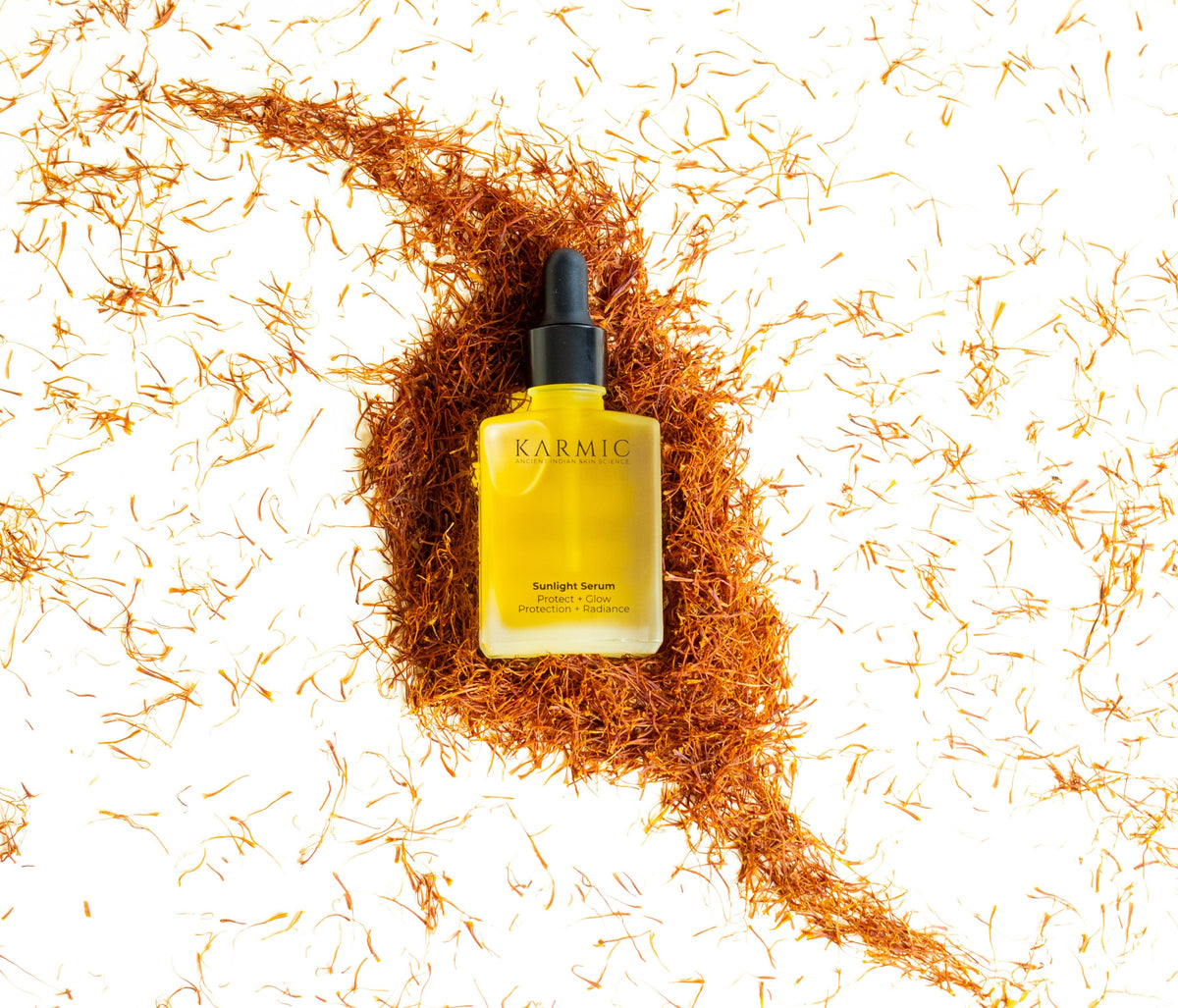
Formulation matters. Some vitamin C products can feel harsh, while others pair the ingredient with soothing botanicals. Karmic Skin's Sunlight Serum combines vitamin C with saffron in a vegan, cruelty-free, concentrated formula rooted in Ayurvedic tradition, so a small amount goes a long way. It is one of the brand's best known products, with more than a thousand reviews on the website.
When you choose any product, look at the packaging as well as the ingredients. Vitamin C can lose potency when exposed to light and air, so a serum kept in a well-sealed bottle, stored away from direct heat and sunlight, is more likely to stay effective for the whole bottle.
Do you still need vitamin C skincare in winter?
It is worth keeping if it suits your skin and you enjoy the results, because winter dullness, indoor heating and everyday oxidative stress are all things this ingredient may help with. It is entirely reasonable to scale back your routine if your skin feels sensitive, and nothing is lost by using it a few times a week rather than daily.
The honest approach is to treat vitamin C as one part of a routine that always includes cleansing, moisturising and sunscreen. If you enjoy a brighter look and your skin tolerates it, winter is a perfectly good time to carry on. If you are unsure, a patch test and a conversation with a pharmacist are an easy place to start.
If you would like to try a vegan, concentrated vitamin C serum, our Sunlight Serum is available at karmicskin.com.